Red Rocks and Beyond: A Guide to Moab and Its Incredible Natural Parks
One of the unexpected gifts of the pandemic was reconnecting with nature. Like so many others, I found solace outdoors and discovered two passions that have stayed with me ever since: biking and exploring America's national parks.
Before then, most of our travels took us overseas. When international travel came to a halt, we began exploring closer to home, and in doing so, I fell in love with the incredible beauty and diversity of the United States.
With its dramatic red rock landscapes, vast open spaces, and world-class parks, Utah is one of my favorite states to explore. It was here that I fell head over heels for Moab and its neighboring national and state parks.
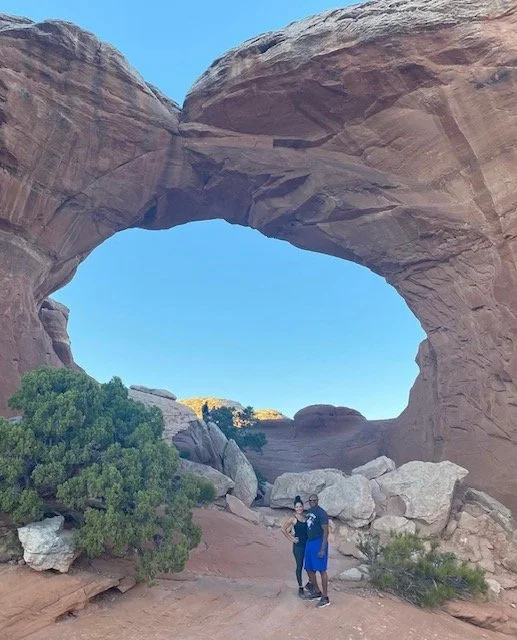
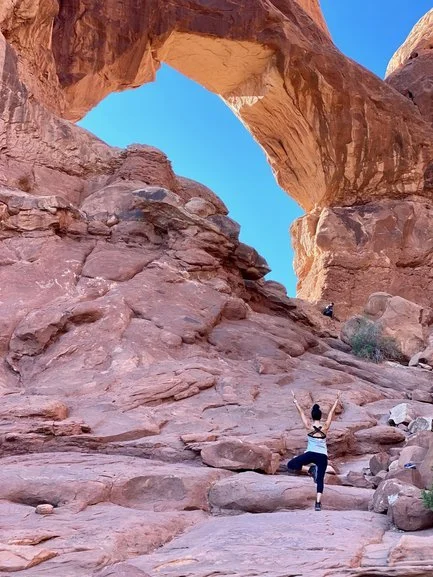
Standing Beneath the Towering Double Arch in Arches National Park
Often regarded as the gateway to Utah’s astonishing red rock canyon country, Moab serves as an ideal base for hikers, cyclists, kayakers, and nature enthusiasts. Enveloped by imposing crimson sandstones cliffs, striking vistas, and expansive landscapes, the alluring town of Moab couldn’t have asked for a more perfect backdrop if it tried.
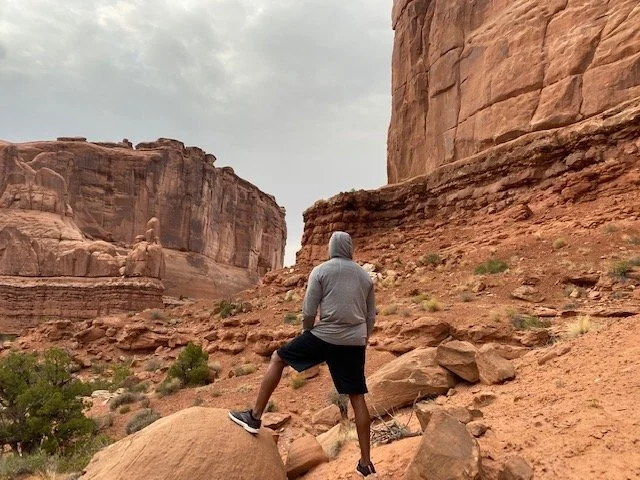
While Moab serves as an excellent launching point to explore the natural playground right outside its doorstep, the town itself has evolved as a lively tourist destination brimming with restaurants, bars, shops, art galleries, and even a bookstore.
Below is how to spend four adventure-filled days in Moab and the remarkable red rock desert range that surrounds it.
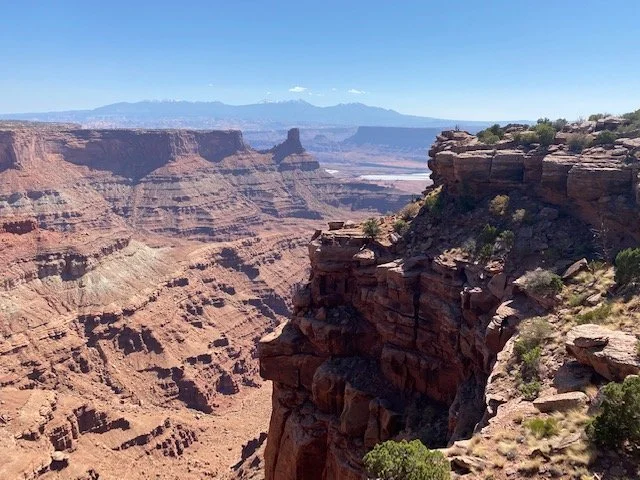
Arches National Park
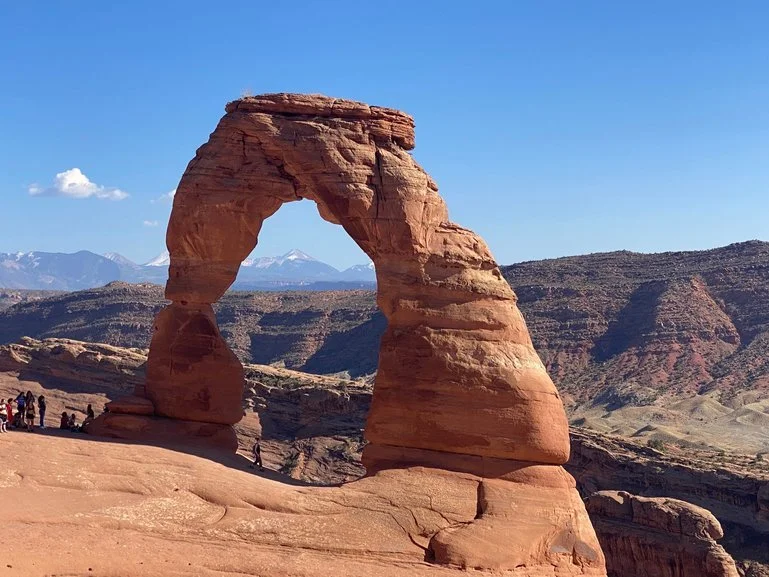
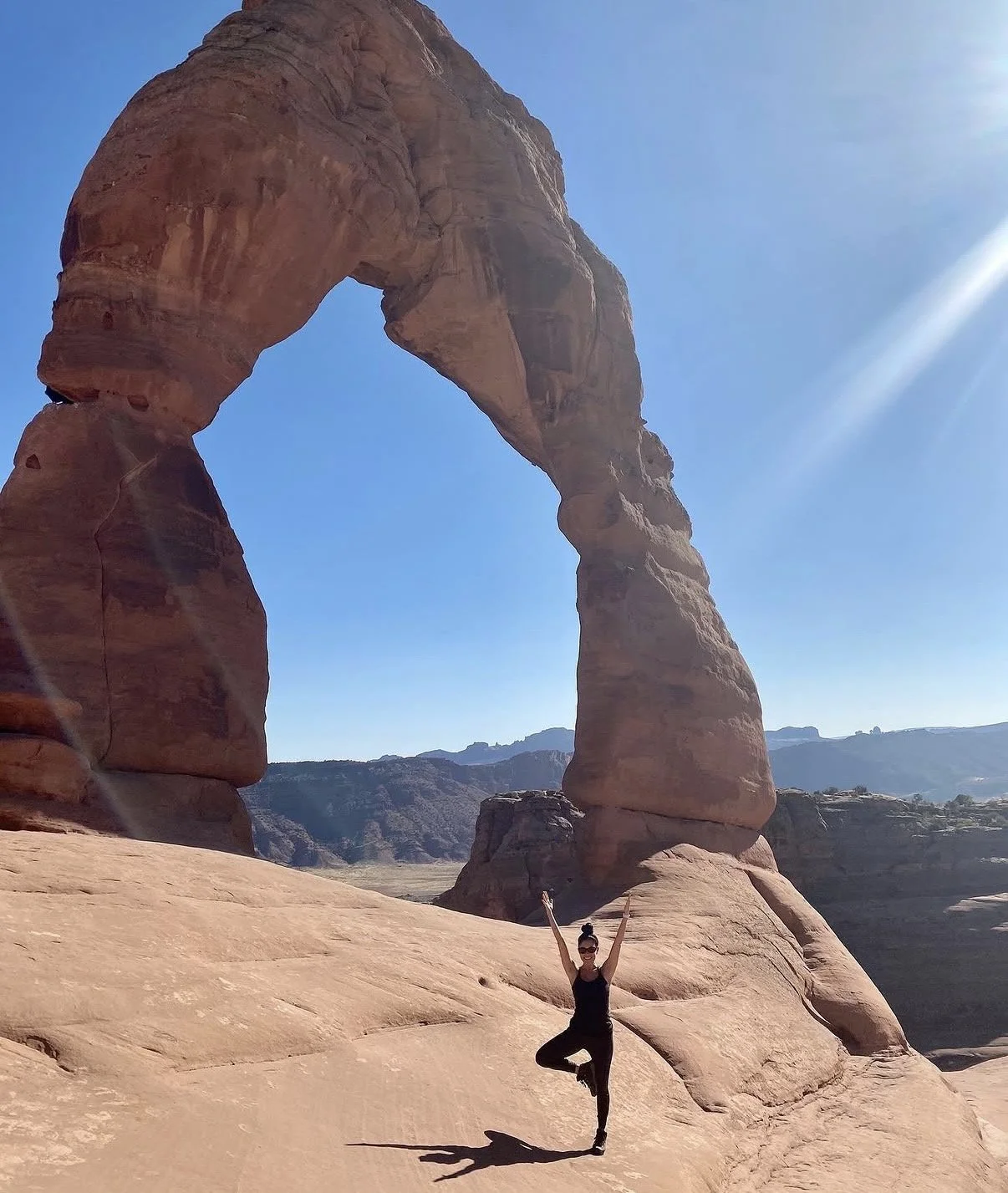
The Iconic Delicate Arch
Fantastic red rock formations and astoundingly formed arches that look like they were carved by the hands of artists, Arches National Park is incredible. The sheer number and diversity of perfectly formed arches scattered throughout this expansive park is mind-blowing.
We spent multiples days exploring this wondrous park. Each time we discovered a new arch, we would turn the corner, and find an even bigger, bolder, and more beautiful arch. This park is a true marvel.
Like most extensive parks, Arches boasts a wide variety of hikes and of course, an abundance of arches. Upon leaving the visitor's center, stop and explore Park Avenue, one of the first major attractions in the park. Along the easy one-mile trail, you'll see many of the park's popular and highly recognizable natural formations including the Three Gossips, the Courthouse Towers, Queen Nefertiti, and the Tower of Babel.
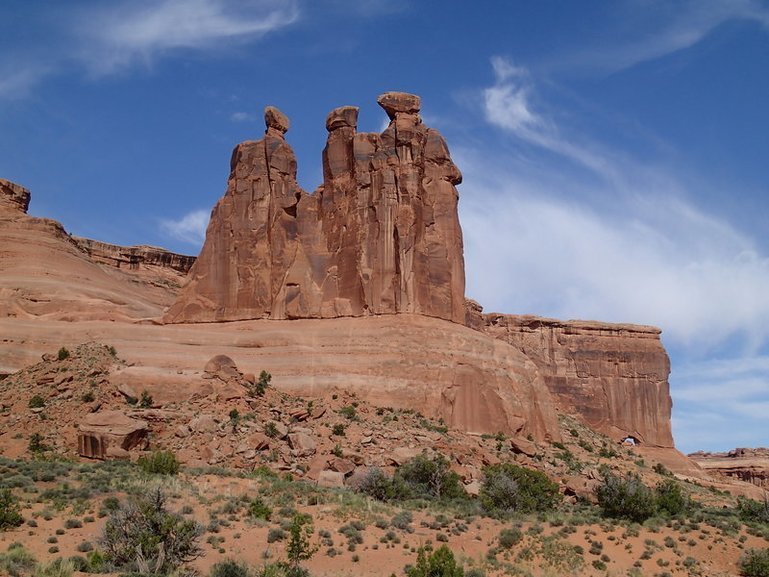
The Three Gossips
Next is the iconic Balanced Rock, a massive boulder weighing about 3,600 tons perched upon a precariously narrow pedestal of stone underneath it. The trail leading up to it is extremely short, .3 miles roundtrip, making it super accessible for everyone.
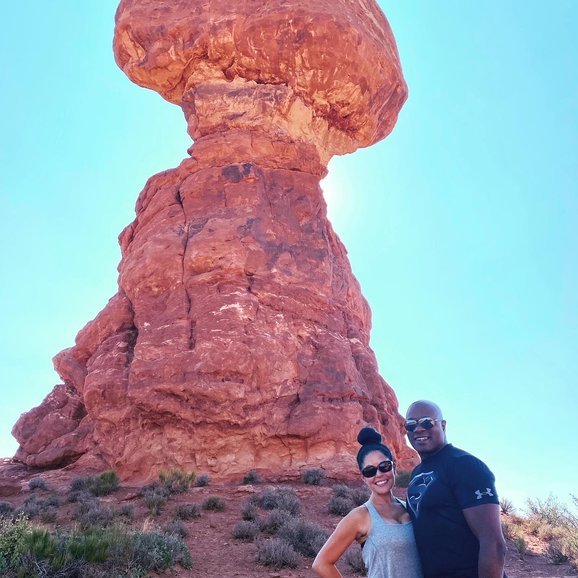
Balanced Rock
Another major area of interest, and certainly worthy of taking some time to explore, is the Windows section, comprised of The Windows, Turret Arch, Cave's Cove, and Double Arch.
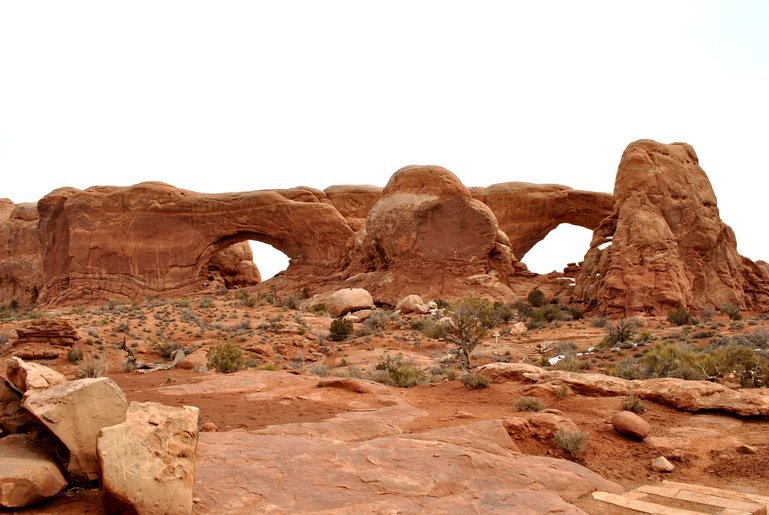
The Windows
The two arches stand side by side, formed from the same sandstone. A huge "nose" separates the two, spanning over 100 feet wide.
Turret Arch may be the smallest arch of the Windows area, but it's no less impressive. In fact, it's part of a more elaborate castle-like structure that features a spire. The views from here are nothing short of jaw-dropping. The short walk to Turret is less than a quarter mile and involves a few stairs.
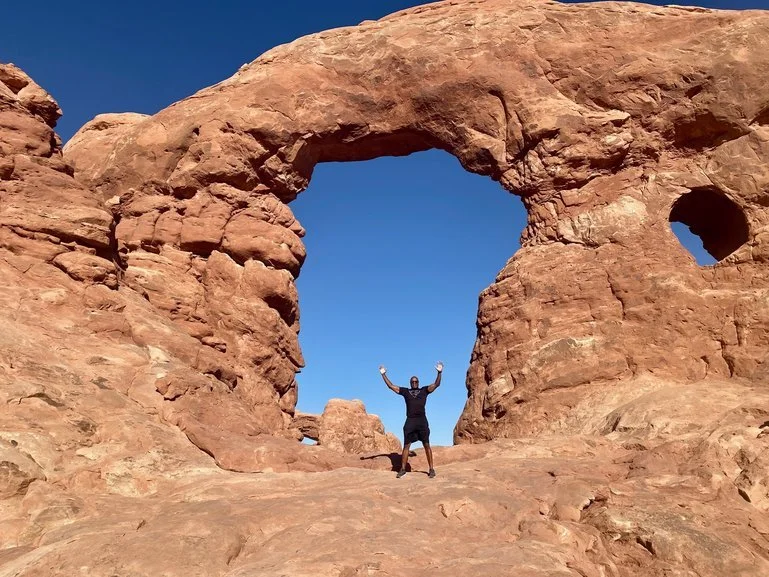
Turret Arch
My favorite of this area was without question the Double Arch, a dramatic rock formation that consists of two arches sharing the same stone as their foundation. The distinctive structure is nothing short of impressive and spell-binding. Although the trail leading up to it is short (a mere half-mile roundtrip), I found myself stopping multiple times to allow myself to bask in its splendor. Expect this arch to be busy with others also coming to marvel at its majestic beauty.
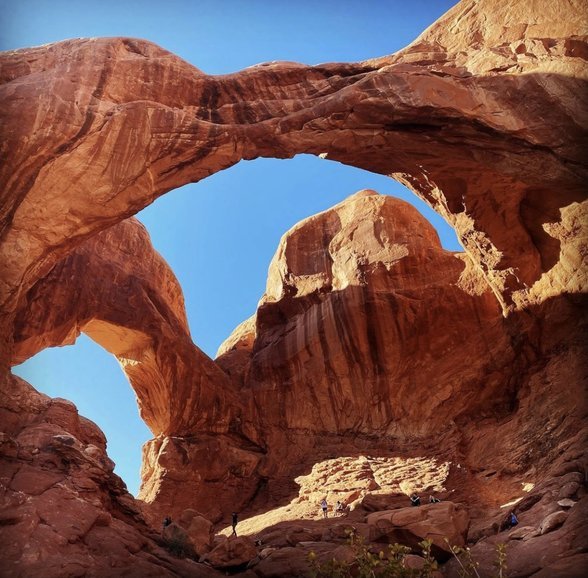
Double Arch
Two magnificent arches located near the Devil's Playground campground that should also not be missed are the Sand Dunes Arch and Broken Arch. As the name suggests, Sand Dune Arch is surrounded by sand, making a bit more unique than the other arches, and a lot of fun to meander through.
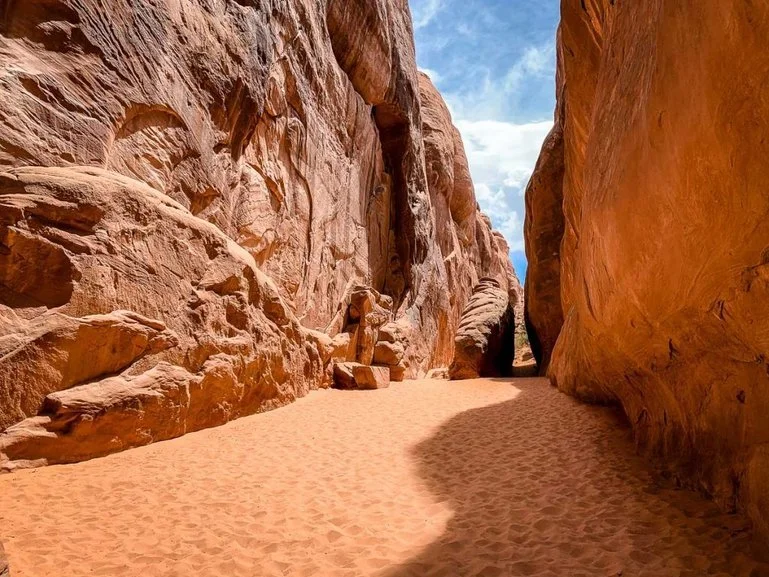
Sand Dune Arch
One of my favorite arches in the park was Broken Arch, which isn't broken at all; in fact, it's more heart-shaped than anything. The flat and easy hike runs mostly through grasslands and is very picturesque and quiet. Note that while the trail is short, it's not very well marked, so be careful not to get lost!
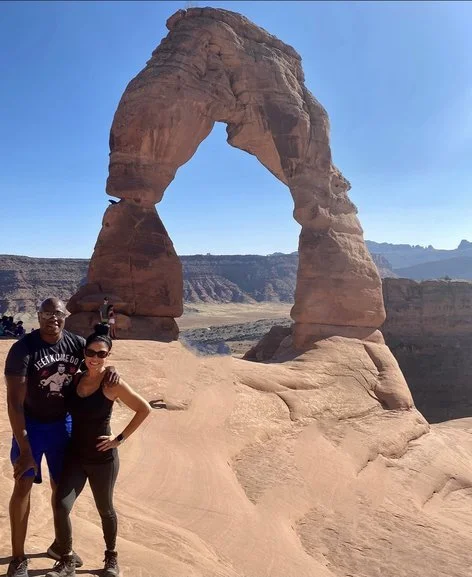
The Park’s Most Recognizable Landmark: Delicate Arch
The shining symbolic star of the park is without a doubt the awe-inspiring Delicate Arch, a must-see while exploring the park. Beyond its notoriety in the national park realm, Delicate Arch has become one of the most famous and recognizable geological formations on the planet.
The term delicate was first coined in 1934 when a writer described the arch as "the most delicately chiseled arch in the entire area." Unlike the previously aforementioned trails, the steep climb to see Delicate Arch up close and personal is much more strenuous. While the 3-mile roundtrip hike isn't long per se, it does include a rather arduous ascent. Highly recommend carrying plenty of water with you. There is no shade along the hike and no relief from the brutal southwest sun.
Delicate Arch is the creme de la creme -- it's not to be missed by any means!
Things to know when visiting Arches National Park:
The park is open year-round, 24 hours a day; the visitor center is open every day excluding Christmas Day.
Click here for current entrance pass rates.
Depending on the season, Arches National Park requires a timed-entry reservation in addition to your park pass. Check the National Park Service website before your trip.
Canyonlands National Park
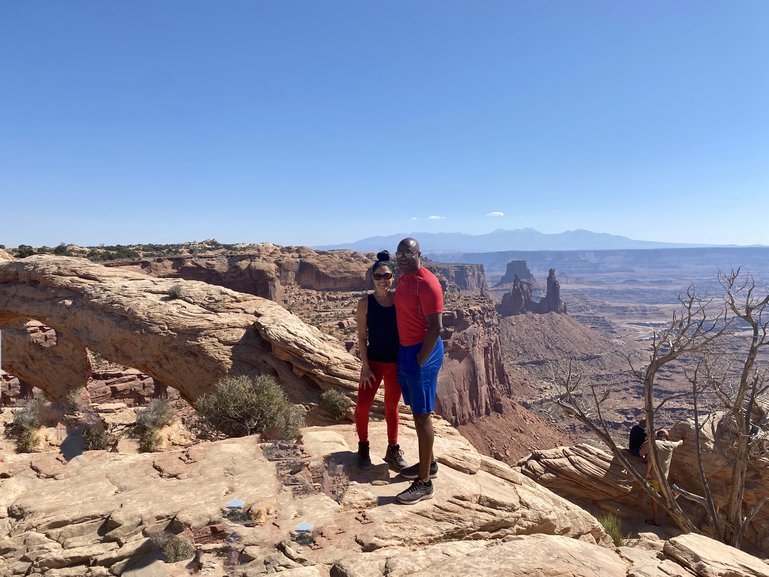
Characterized by its broad desert landscape dramatically carved by the Colorado River, Canyonlands National Park holds the title as Utah's largest national park. While it is sometimes overshadowed by its neighbor Arches (approximately 30 miles separate the two), Canyonlands is an incredible natural wonder -- an impressive tour de force that is not to missed.
Gorges, mesas, canyons, mammoth scarlet structures, and spectacular 360 degree vistas are just the beginning when it comes to this monstrously vast desert region.
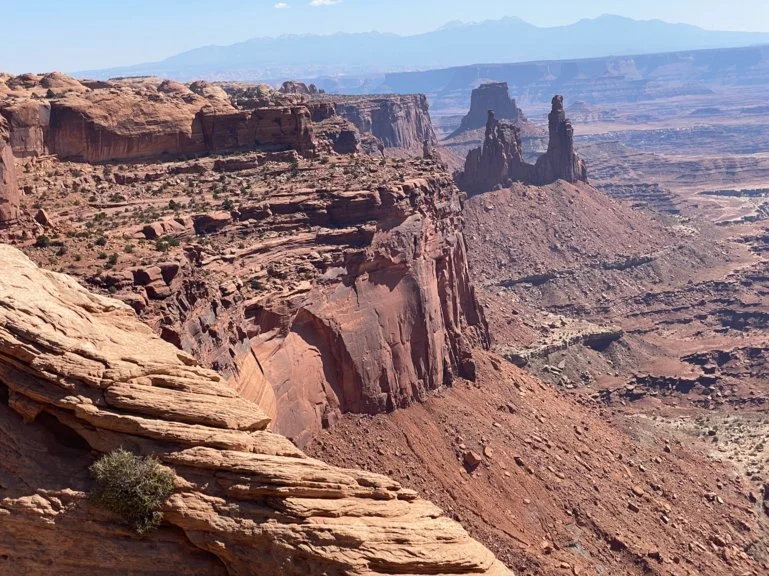
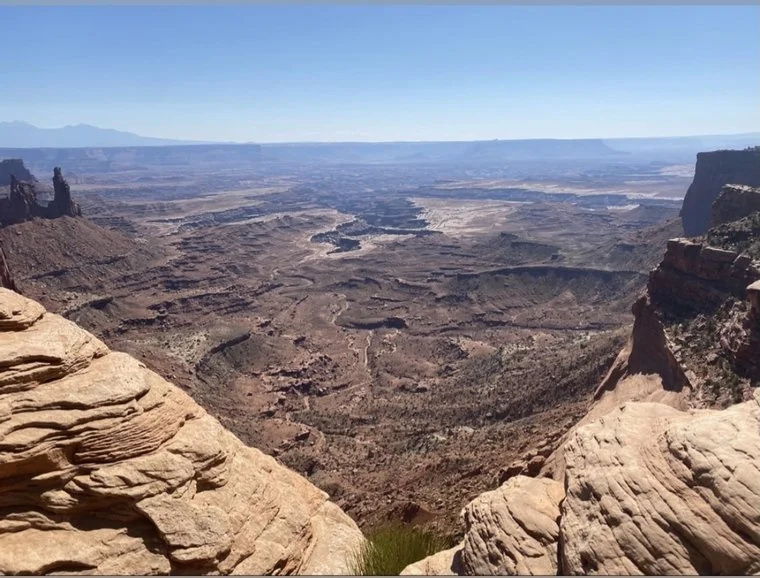
Most visitors will launch their visit to the park at Island in the Sky, the most accessible spot in the park that offers sweeping views of the surrounding terrain. Start at the Grand Viewpoint, which overlooks the White Rim, the Needles, and distant alpine mountains.
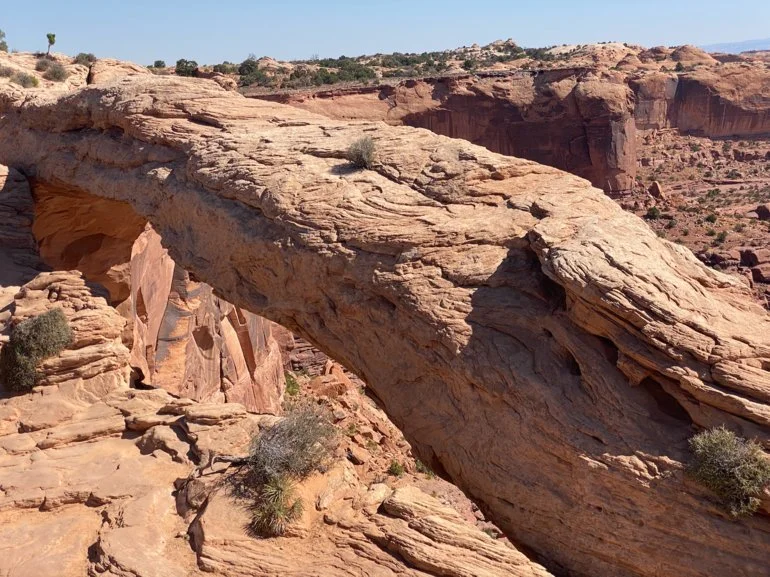
Next, hike to Mesa Arch, a sensational arch situated on a cliff edge. The vista from underneath the arch is arguably more incredible than the arch itself. This was my favorite place in the park.
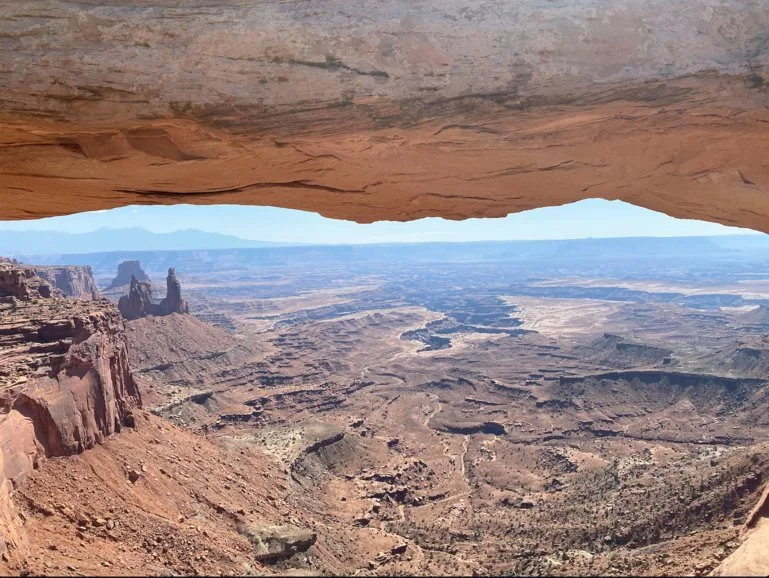
Sometimes the Most Beautiful Views Come From Under a Rock
A few other outstanding hikes include Aztec Butte (one mile roundtrip), Whale Rock (one mile roundtrip), and Upheaval Dome (first outlook is a little less than a mile and the 2nd outlook is nearly two miles). All of these hikes offer phenomenal panoramic views of this wide-ranging region.
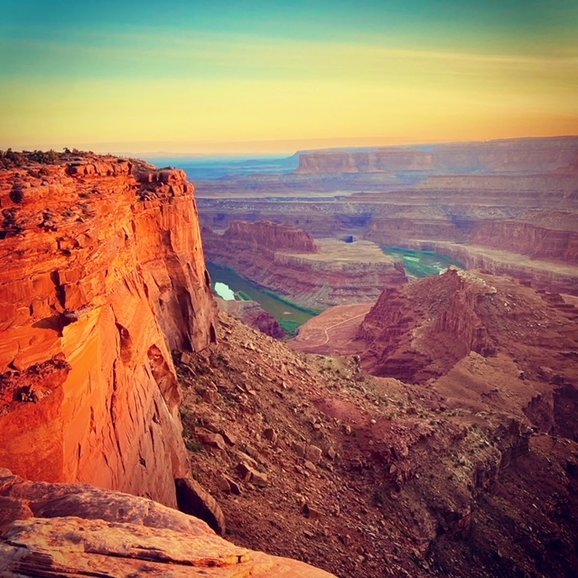
Sensational Sunset Gazing at Dead Horse Point State Park
After a full day of hiking, finding a lovely spot to relax and watch the dazzling sunset at Dead Horse Point State Park was the perfect ending to a pretty perfect day. Like everywhere else in and around Moab, the arresting views here are extraordinary -- the imposing desert landscapes that stretch across the region are a nature lover's dream.
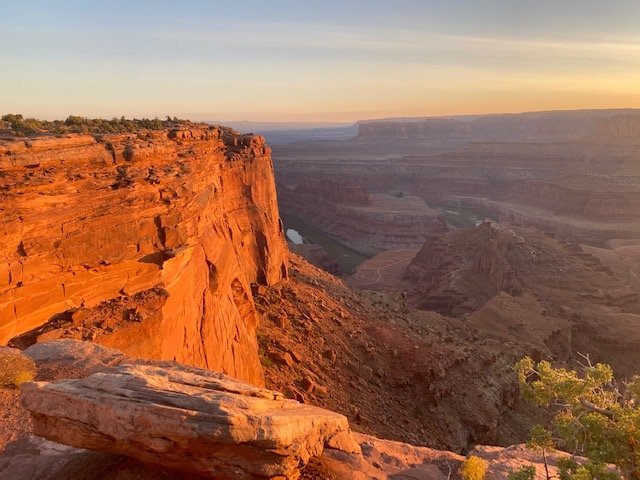
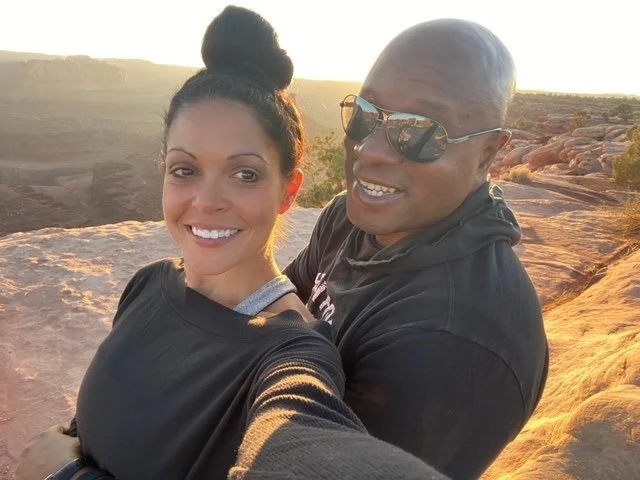
There are plenty of trails to hike along of course, but our tired legs and aching feet were begging to rest upon the red rock perches that overlook the sprawling desert terrain. The park's utter immensity, dramatic colors, endless layers, and exquisite sunset left us breathless.
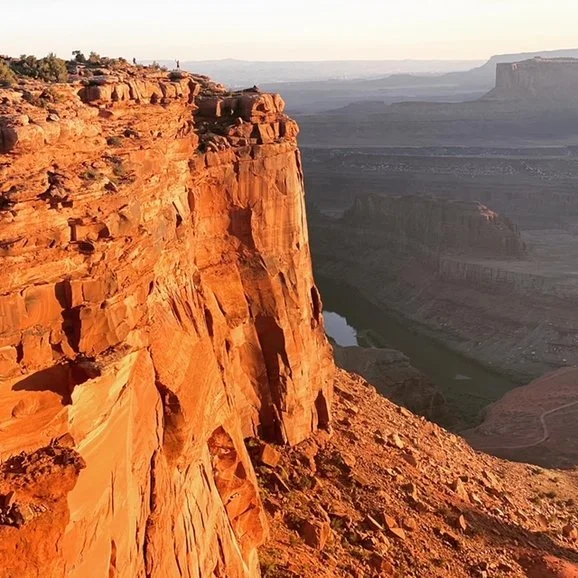
I'm not exactly sure how Dead Horse didn't make the cut to be included in the neighboring national parks; its grandness, raw splendor, and magnificence is equally as impressive and just as captivating as Arches and Canyonlands. Dead Horse is a must-visit on any Moab itinerary, especially for those looking to catch a fiery sunrise and/or chase a gorgeous sunset.
Things to know when visiting Dead Horse Point State Park:
Click here for hours, entrance fees, directions, and more information.
Moab Horses
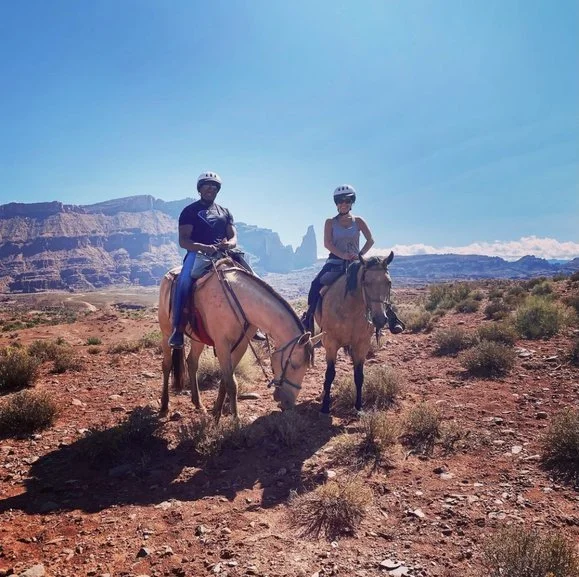
There's more to red canyon country than national and state parks. Horseback riding along rugged trails encircled by jaw-dropping scenery has quickly become one of my favorite things to do while traveling. For me, meandering through the open back country on horseback while surrounded by the desert's untouched splendor is as close to perfection as it gets.
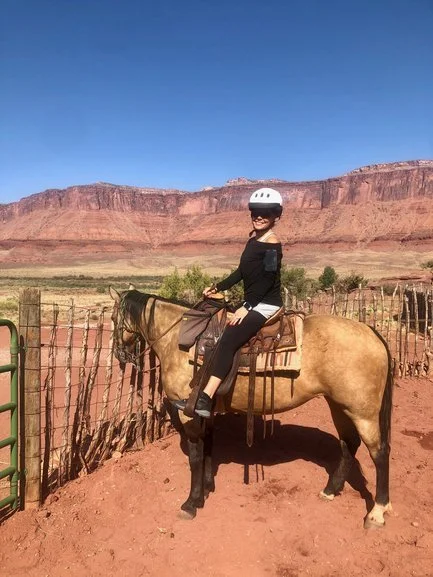
Fitted and Ready to Go!
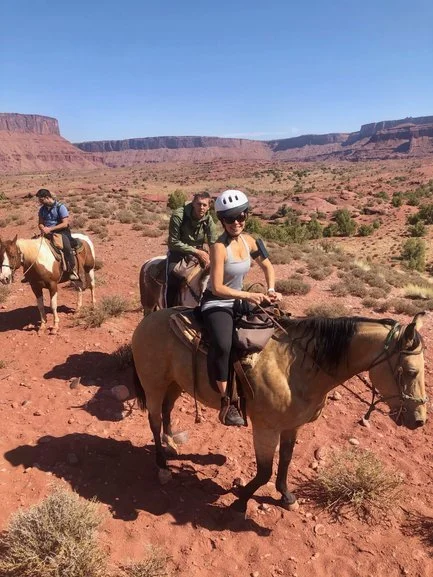
We booked a wonderful half day trail ride with Moab Horses. The duration of this tour is about 3 hours, however we were actually on horseback for a little more than 2 hours. They were very thorough with safety procedures, matching us with the appropriate horse based on size and experience level, and saddle fitting. Small group tours are limited to 8 people (we had 6) and our guide was extremely knowledgeable and affable.
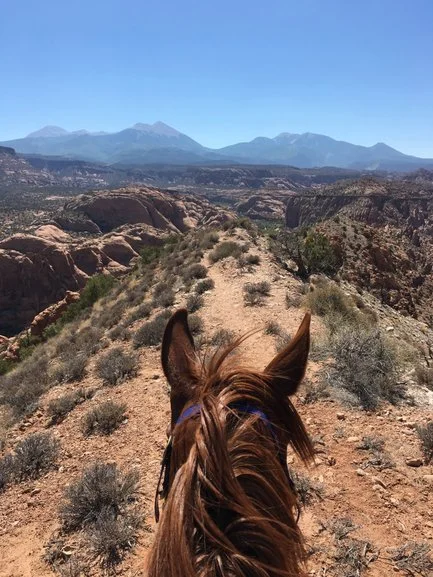
The tranquil ride winds through towering cliffs, garnet stained mesas, and the Colorado River, making for an amazingly memorable ride. Highly recommend!
Things to know when booking your Moab Horses trail ride:
Half-day, private, and solo rides are available.
Allow yourself additional time to get there -- it's a bit hard to find (we got lost) and there's a good chance you won't have cell service
Visit their website for more information.
Additional Tips to make the most of your trip to Moab:
We flew into Salt Lake City, rented a car (a car is a must here!) and drove to Moab, about a 3 hour and 45 minute drive.
As with most places, when you decide go to Moab can drastically affect your experience. Summertime can be extremely hot and temperatures often exceed 100 degrees. Spring and fall are often touted as the best times to visit. We traveled in mid-September and the weather was perfect -- average temperatures during the day were in the 80s.
Book Early. Moab is a popular destination, especially in spring and fall. Hotels, campgrounds, and popular tours often sell out months in advance.
Consider buying an America the Beautiful PassIf you're visiting multiple national parks during your trip, the annual pass ($80) quickly pays for itself and covers entrance fees to Arches, Canyonlands, and hundreds of other federal recreation sites.
Start Early. Popular trails like Delicate Arch and Devils Garden become crowded, and extremely hot, later in the day. While I am by no means a morning person, earlier mornings here offer a much more enjoyable experience.
Come prepared. Among some of the important things to pack include a water bottle, sunscreen, sunglasses, hat, and hiking shoes.
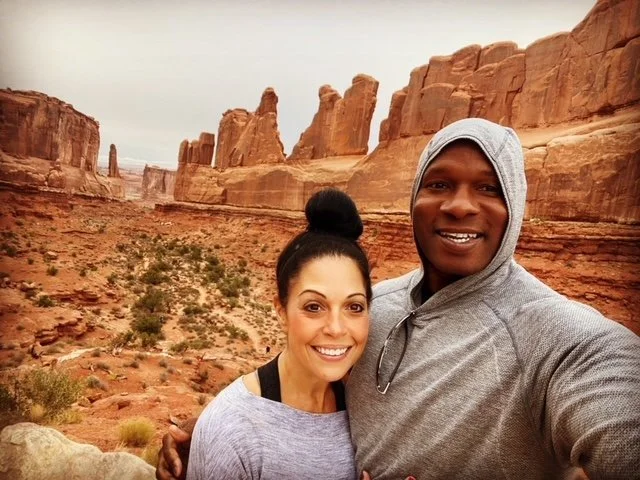
We came for the national parks and left with a whole new appreciation for the beauty of the American Southwest.
Thanks for an unforgettable adventure, Moab.